 emptyname
Birds, mammals, and man … were all formed upon one original type, which only varies more or less.
Goethe, 1796
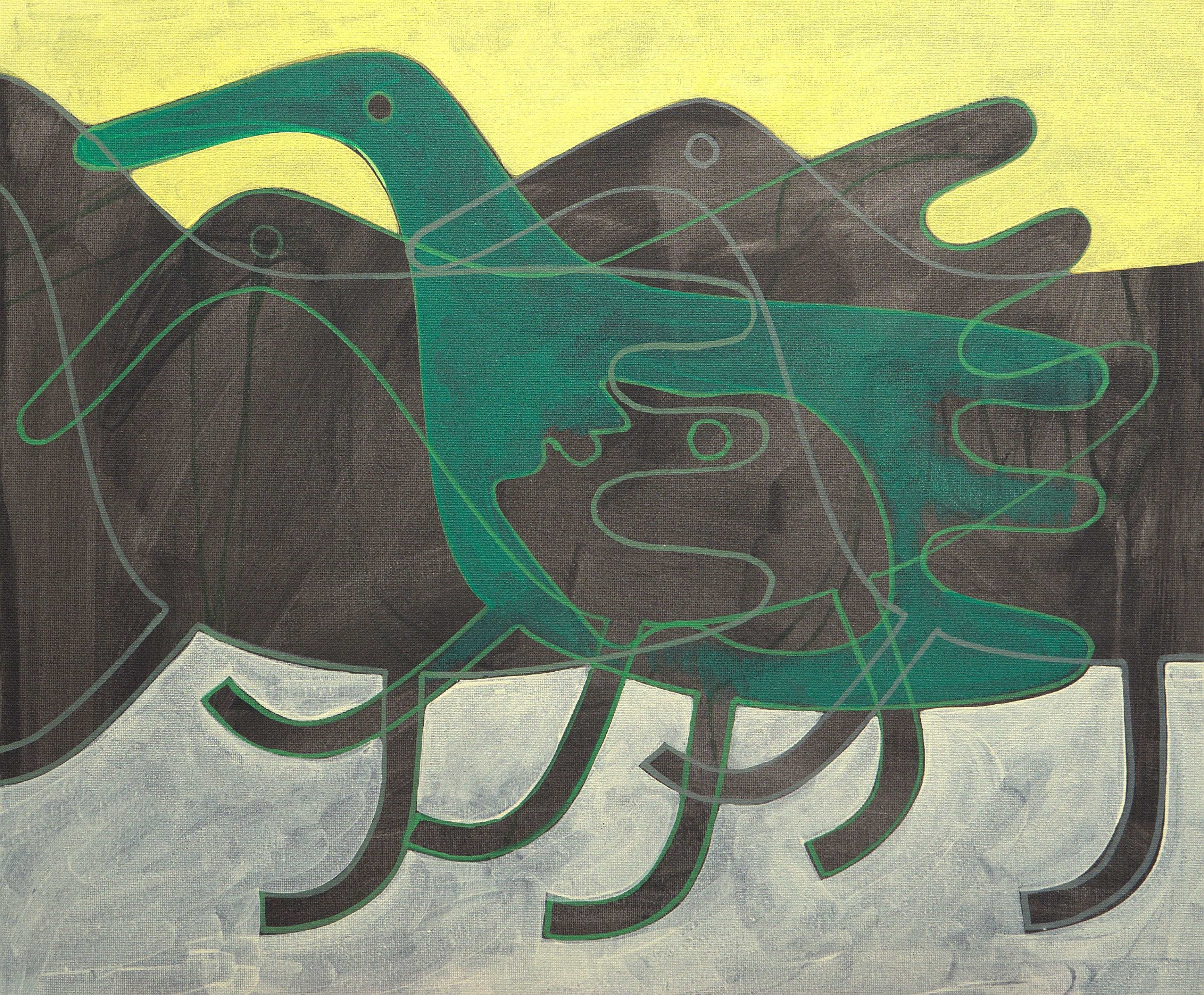
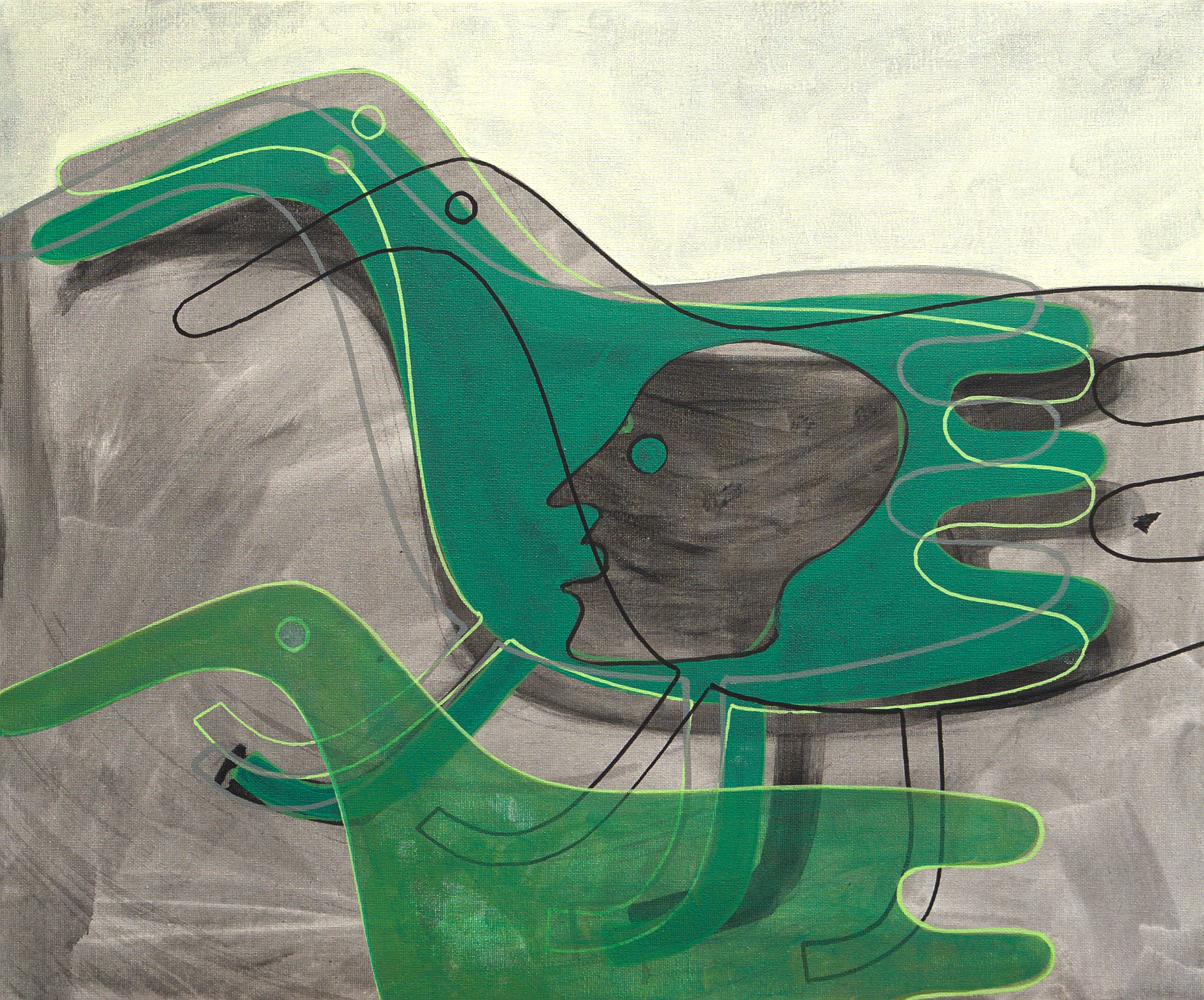
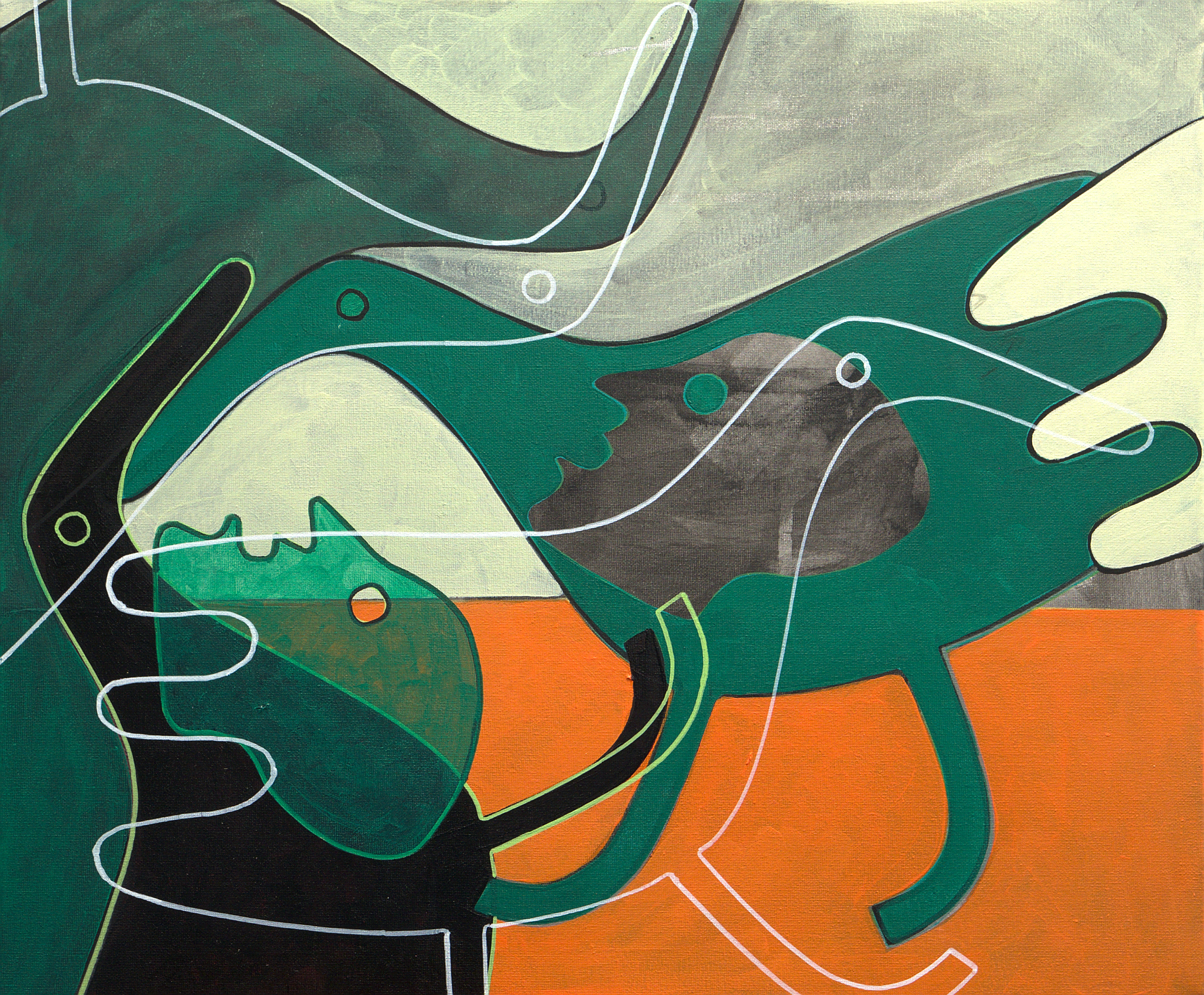
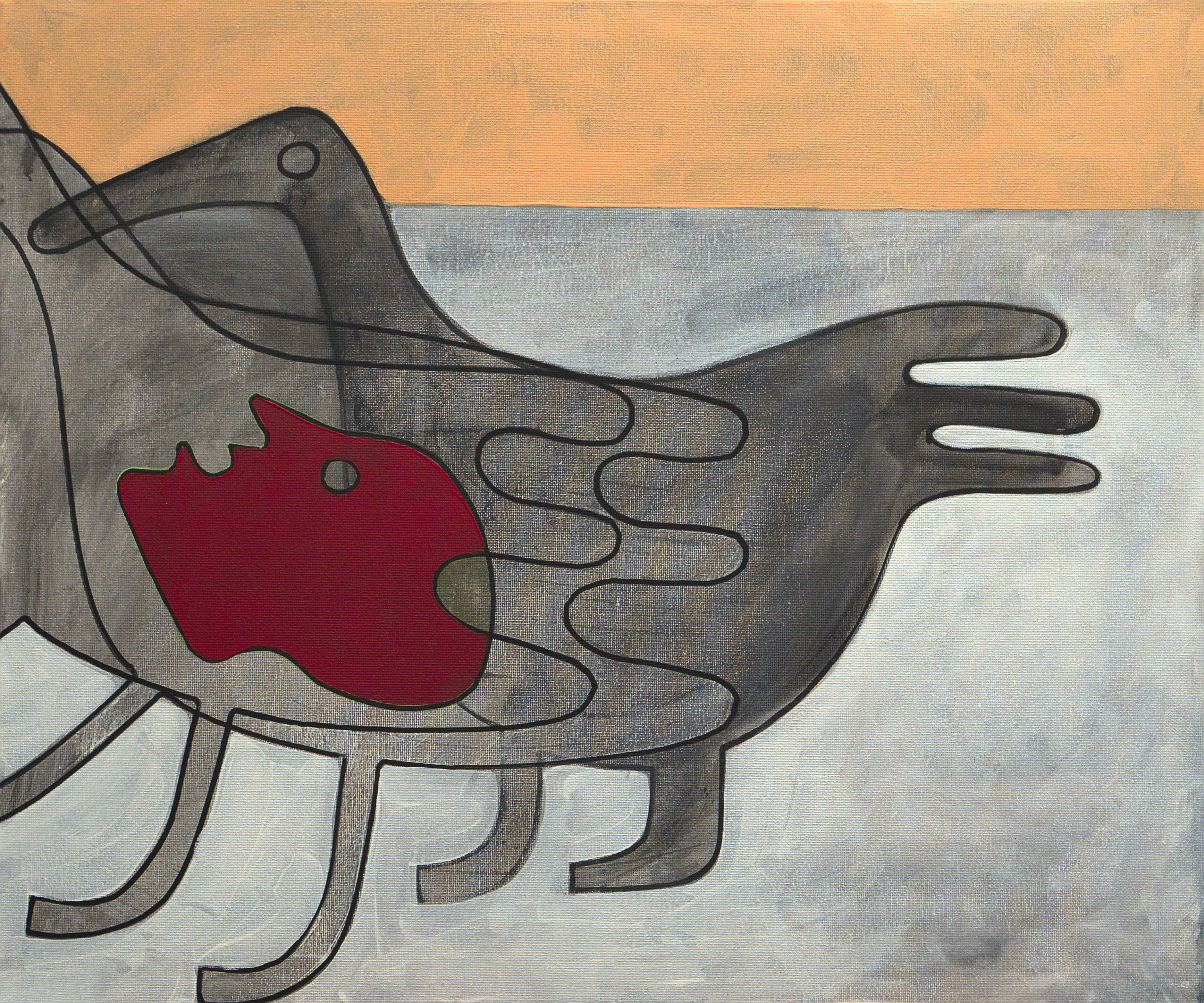
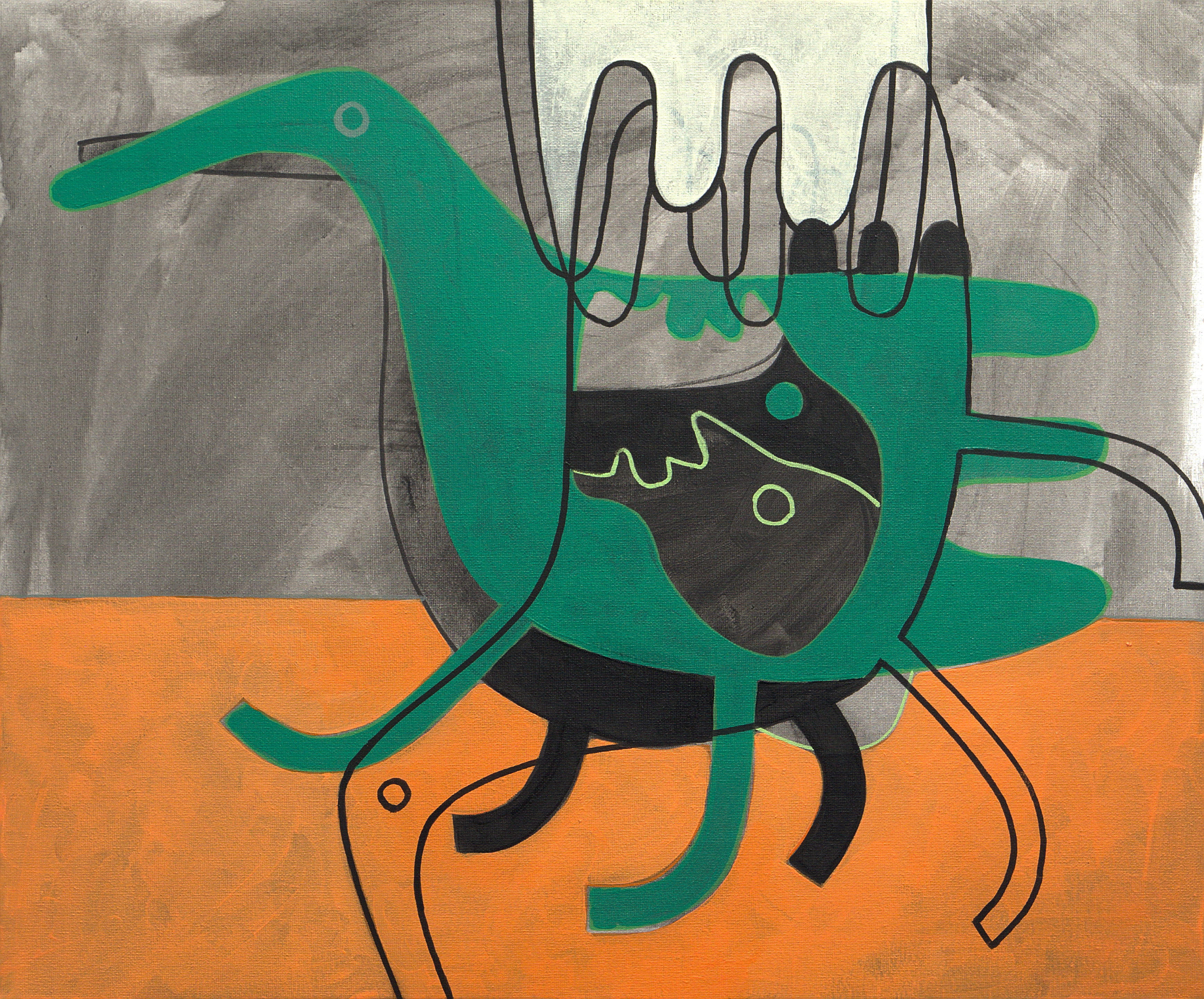
Cutting a stencil means cutting a rule into matter: paint may pass here and be stopped there, and every later use turns one permission among many into an actual mark. What appears is an instance rather than a copy, because no bird is the source of the next and no first bird waits somewhere behind the sequence. The unmanifested rule isn't an invisible object. It's the still-open range of positions, scales, colours, overlaps and omissions that the cut can produce.
Perceived reality usually gives us the opposite arrangement. Objects arrive as finished facts, while the structures that allowed them to appear remain buried in inference. The stencil puts the machinery first and the object second, stripping the object of its apparent independence and showing it as a local event, one temporary settlement between rule, material and circumstance. What looks self-contained may be nothing of the kind.
The skull drives this problem inward. The human sign, usually cast as observer, measure and ruler, is nested within the animal sign, inside what human culture more often keeps outside itself as specimen, resource or symbol. The rule produces the bird, and the ruler becomes cargo. Whether the skull registers as memory, parasite, seed or warning matters less than the jurisdictional dispute it opens: who contains whom, and which order has mistaken itself for the container of the other?
Layering extends the rule from one body to a world. Every pass grants or denies paint access to part of the surface, so some forms arrive as deposits while others exist as protected absences, precise gaps made by preventing an event rather than adding one. No layer contains the whole, and each brings a partial instruction into collision with earlier instructions, covering, exposing, interrupting or rerouting them until the surface becomes less a composition than a negotiated territory. It's a border regime with wet edges.
Within the fixed form, personal taste of the artist gains the rare freedom to stand down. Constraint doesn't remove choice, but it stops choice from redesigning every encounter and keeps ego-driven correction on a shorter leash. The same rule returns under altered conditions and has to live with consequences that weren't fully authored in advance, leaving unplanned relations intact long enough to become knowledge rather than being polished into style. The procedure asks a question instead of dressing up a conclusion that arrived before the work.
Following the rule doesn't force the event to repeat. Paint gathers at an edge, skips across the surface, bleeds beneath a cut or slips out of register, and none of this needs the incense of the sacred accident. These variations mark the point where abstract permission becomes a physical occurrence shaped by pressure, pigment, timing and surface. Matter isn't a neutral courier for information. It edits, delays, thickens, smears and sometimes refuses. Information gets paint under its nails, and each instance acquires a biography the stencil could never specify.
This work builds a small, dirty test machine where repeatable structures become variable bodies and where absence acts. Nothing is proved, but the proposition is put to work: repeat it, interrupt it, watch what survives. It's the formula from which a world can be rendered.